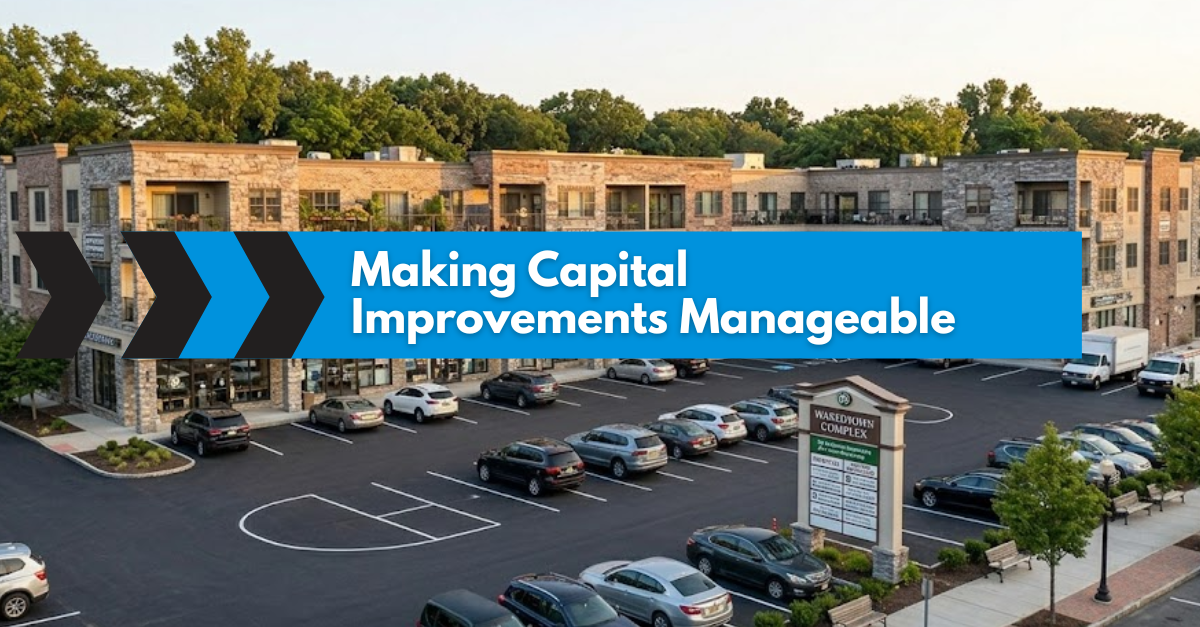
Making Capital Improvements Manageable
Property managers across New Jersey are facing increasing pressure to keep buildings safe, compliant, marketable, and tenant friendly. From interior upgrades to structural repairs, capital improvements require planning, budgeting, and smart execution. Yet one of the most common challenges is not the work itself but how to approach it in a way that is financially responsible and minimally disruptive to tenants.
Large improvements can feel overwhelming. They require time, coordination, and long-term budgeting. The good news is that most projects do not need to be tackled all at once. Thoughtful phasing can turn what looks like a major undertaking into a series of manageable, predictable, and cost-effective steps.
Phasing is not only easier on the operating budget. It allows improvements to happen while buildings remain occupied and functioning as usual. For property managers who balance tenant satisfaction with financial stewardship, this approach can be a powerful tool.
Why Large Projects Can Feel Overwhelming
Every property has a backlog of improvements that need attention. Some are urgent, such as addressing structural concerns or code issues. Others are elective but important to tenant satisfaction, such as lobby refreshes, updated lighting, or exterior improvements.
The difficulty often lies in the scale. When projects are bundled into a single capital event, the timelines are compressed, budgets expand quickly, and disruption increases. Property managers face pressure from both ownership and occupants, all while trying to maintain regular operations.
Common challenges include:
- Limited annual budgets that cannot absorb all planned improvements at once
- Tenant coordination when work must occur during business hours
- Uncertainty around the true scope until work begins
- Decision fatigue for owners who must approve numerous items at the same time
- Risk of pushing work off entirely due to its perceived complexity
The result is a cycle where necessary improvements get delayed, leading to higher future costs and visible deterioration that affects tenant experience.
Phasing offers a more manageable alternative.
Phasing Makes Improvements Predictable and Budget Friendly
Phasing is the process of breaking a large project into smaller, well-defined components that can be completed over shorter durations than the larger project, months rather than years. This keeps budgets under control, minimizes stress on tenants, and allows property managers to make steady improvements without major disruptions.
Key benefits include:
More Control Over Cash Flow
Instead of a single high-cost capital project, phasing distributes expenditures across multiple budget cycles. This approach makes approvals easier, aligns with annual planning, and reduces the financial strain on owners.
Better Scheduling Around Occupied Spaces
Many properties in New Jersey are fully occupied. Shutting down areas for long periods is not realistic. Phased work allows improvements to happen in windows that make sense for tenants, whether after hours, by floor, or by zone.
Lower Tenant Impact
A series of smaller projects keeps pathways open, systems functioning, and interruptions minimal. Tenants appreciate when necessary improvements do not interfere with their daily operations.
Ability to Reassess and Adapt
A phased plan can shift as tenant needs, market conditions, or budgets change. This flexibility prevents missteps and keeps property managers in control of outcomes.
How to Break a Large Project into Reasonable Phases
Thoughtful planning is essential. Phasing works best when priorities, timelines, and scopes are clearly defined. Here is a practical framework property managers can follow.
- Start With a Comprehensive Assessment
Identify everything that needs attention. This often includes:
- Structural and concrete repairs
- Exterior and envelope improvements
- Accessibility or code compliance issues
- Plaza enhancements
- Parking and site improvements
With a full picture in hand, you can prioritize based on urgency, tenant impact, and available budget.
- Group Improvements into Logical Categories
Examples include:
- Life safety upgrades
- Roofing or waterproofing
- Facade repairs
- Parking structure repairs
- Plaza refresh projects
This helps create work packages that can be completed independently without affecting the overall performance of the building.
- Sequence Work Based on Impact
High-impact work should be timed carefully. For example:
- Structural repairs completed first for safety
- Roof or envelope work completed before interior renovations
- Tenant-facing improvements spaced out to avoid disruption
This strategy ensures work progresses in the right order without redoing effort later.
- Consider Seasonal Constraints
New Jersey’s climate affects construction timelines. Exterior work is best scheduled in warmer months. Interior projects fit well into winter schedules when outdoor work is limited.
- Communicate the Phased Plan Clearly
Tenants appreciate transparency. When they understand what is being done and why, they are far more receptive to temporary inconveniences. They will be even more appreciative after the project is complete and the building is improved.
Proactive communication builds trust and reduces complaints.
Phasing Helps Maintain Tenant Satisfaction and Property Value
Property managers know that tenant retention is influenced by the physical condition of a building. When tenants see improvements happening, they feel valued and supported. Potential tenants see an Owner who values their property and thier tenants and is willing to invest in keeping them happy. Even small enhancements can change perceptions.
Visible investment sends a strong message. It shows ownership is committed to maintaining a quality environment. This often leads to:
- Higher tenant satisfaction
- Faster leasing activity
- Stronger retention
- Better rental rates
- Improved overall building reputation
Ignoring necessary improvements has the opposite effect. Deferred maintenance is noticed quickly and tends to grow into larger issues. Tenants see declining conditions as a sign of absent ownership and may start exploring alternative spaces. Prospective tenants will look for alternative spaces that are more inviting to their employees and clients.
Phasing allows property managers to consistently show progress, even if the overall modernization takes several years. This steady effort keeps the property looking cared for, which is one of the most powerful signals you can send to occupants.
A Strategic Approach for Long Term Success
Budgeting and phasing are not shortcuts. They form a valid, responsible strategy for maintaining complex properties without overwhelming budgets or tenants.
A successful phased improvement plan will:
- Establish predictable annual spending
- Reduce operational disruptions
- Allow for ongoing tenant operations
- Create visible progress throughout the property
- Build trust and confidence among occupants
- Protect long term asset value
This approach lets property managers work proactively rather than reactively. It creates momentum and ensures improvements happen consistently year after year.
Final Thoughts
Managing capital improvements across commercial and multifamily properties in New Jersey requires balance. Property managers must advocate for long term building health, work within annual budgets, and maintain strong tenant relationships during the process. Large projects can feel daunting, but breaking them into smaller, phased efforts makes the process far more manageable.
With thoughtful planning, clear communication, and a realistic budget strategy, property managers can tackle improvements successfully over the course of months and years. Tenants notice the investment. Owners appreciate the responsible approach. And properties maintain their value and appeal in a competitive market.
South Shore Construction has spent over four decades working alongside property owners and managers on exactly these types of projects — phased repairs across occupied commercial and multifamily buildings. From parking structure repairs and facade restoration to waterproofing and structural concrete work, we understand the coordination that occupied properties demand. We plan around tenant schedules, communicate proactively with building staff, and sequence work to keep disruptions to a minimum. If you are developing a phased improvement plan for your property, South Shore Construction is ready to help you execute it the right way — on time, on budget, and with the care your tenants expect.



 202 E 11th Avenue
 732-750-5777