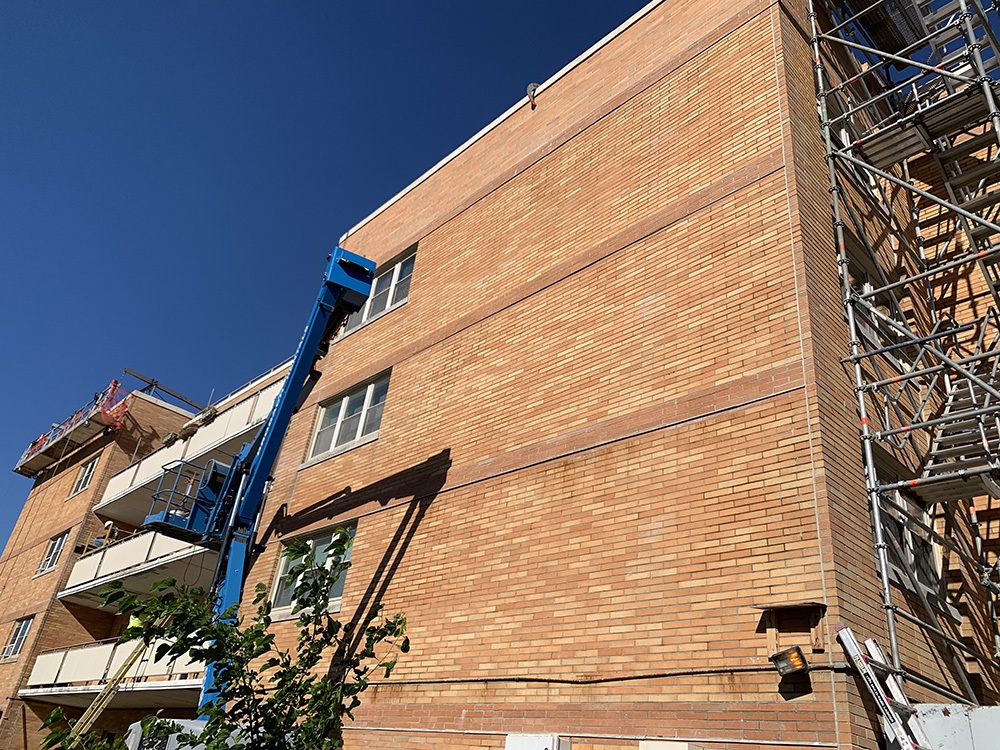
Facade Repairs
First impressions are everything and your real estate investment should be no exception. The exterior building envelope is one of the first items atenant or visitor will notice about the building. Sometimes property owners underestimate the impact that proper exterior maintenance has on their ability to rent out their vacant space, maintain existing tenants, or sell the property. They think, “If I had the space rented, I would have money for the repairs,” but the reality is that spending the money in advance will help to attract the tenant or buyer that they desire.
In addition, keeping your building’s exterior well-maintained not only keeps it looking good, but keeps bad weather and moisture outside, so it is functioning properly. Keeping water and harsh weather on the outside of your building will help to keep it operating more efficiently, which can cut down costs on your heating and air conditioning bills. It can save you from wasting money on unnecessary sheetrock replacement, carpet replacement, or repainting as well.
How can I tell if I need my facade repaired?
If you are experiencing leaks or any sort of water infiltration, that is indication that water is entering the building from outside.
Other Signs to Look for:
- Exterior cracks
- Staining, efflorescence, or rust
- Concrete,brick, or stucco breaking apart
- Gaps or voids between materials
- Old or failing caulk
- Water stains at the interior, especially around windows or doors.
- Bulging walls
How are these repairs made?
Repairs are made from the exterior, typically by removing the existing materials and replacing them with new. During the repairs, efforts are made to redirect water back out of the building using flashings, sealers, or other protective membranes. Depending on the size of the building, the work is accessed using ladders, pipe scaffolding, aerial lifts or suspended scaffolding.
What are the benefits of having this done?
A nicer looking aesthetic and curb appeal can go a long way in attracting future tenants and demanding higher rent or dues. In addition, you will reap the benefits of a more efficient building which means cost savings each month on energy bills.
It’s just a small area, can I just leave it?
Small repairs that are ignored end up turning into large repairs. This means more costs and more disruption to your property.It is highly recommended to always to fix small problems as early as possible.
How much does it cost?
Since buildings come in all shapes and sizes, are built with different types of materials, and have different amenities (plaza decks, balconies, etc.) there is no “one size fits all” cost. The important thing to keep in mind is, the longer you wait, the more expensive it will be. If you notice immediate signs of wear and tear, it is in the best interest of your building and budget to get these items taken care of right away. As time goes on these issues will become worse, making the damage more extensive which equates to more money to correct it. An experienced engineering firm who specializes in façade repairs can provide you with a capital reserve budget based on projected life spans of materials so that the owner or association can put money aside for future repairs.
What are some common mistakes that property owners make when it comes to their facade?
- Not inspecting. Most inspections are made only after a problem occurs.
- Not making the repairs early. Often times, this is referred to as “deferred maintenance.” You can do it now, or you can do it later, but it is not going away.
- Not budgeting for repairs and capital improvements. Quite often we encounter this issue due to a lack of planning. All materials have a life expectancy and will require repairs or replacement in the future. If your ownership strategy is long-term, proper budgeting is a must.
What are some of the biggest challenges of facade repairs?
Matching new repair materials to existing aged and weathered materials. Over time, the way construction materials are made changes, which can cause some difficulty in finding suitable matching materials. Mock-ups of repair materials are important to ensure that the new materials are a close match to the existing and do not detract from a building’s appeal and beauty.
Secondly, facade repairs will cause some disruption to the property. Noise and people working at the exterior of your unit can be an issue. Also, some areas may need to be shut down to ensure safety. This may result in the temporary loss of some amenities or an inconvenience to access the building.
What can I do to ensure that my facade repair project goes smoothly?
Hire the right team!
Contractor – this is the most important team member. Having a knowledgeable and experienced contractor is critical in ensuring that a project is done properly. They know how to coordinate the work efficiently, where to source materials, how perform quality work, and can often times anticipate possible issues before they happen so that they do not cause project delays.
Architect/Engineer – again, an experienced professional is critical. Knowledge and experience in façade repairs will help to ensure a smoother project. Poor or incorrect construction details can result in delays and additional, unanticipated costs.
Property Manager – your property manager has an important responsibility when it comes to communicating with the residents or tenants. They are responsible for notifying the tenants of ongoing construction and closures, as well as fielding questions or complaints from the residents. Having a property manager that can calmly deal with the tenants and keep them up to date regarding the status of construction will help to keep the residents happier when dealing with the disruption at their property.
What can be done to prevent future damage?
A basic walk through and visual inspection annually or bi-annually can make a big difference in noticing discrepancies on your building’s facade. If you do notice sign of deterioration, do not hesitate to call your facade contractor or a professional, structural engineer. In addition, it is highlyrecommendedto have an architect or engineer, who specializes in building facade restoration, perform a condition assessment every 7-10 years. Not only will they help you identify existing deficiencies, but they can anticipate the remaining life expectancy of many of the exterior components of the building so that you can budget for their future repairs or replacement.




 202 E 11th Avenue
 732-750-5777