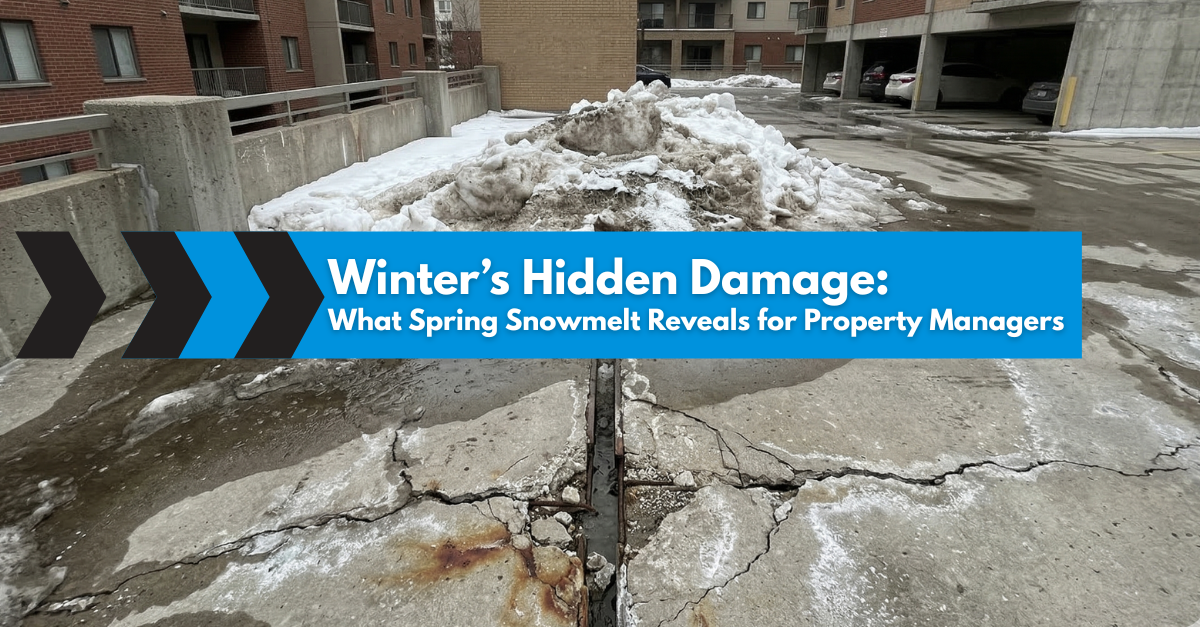
Winter’s Hidden Damage: What Spring Snowmelt Reveals for Property Managers
As we inch closer to spring and temperatures begin to rise, many property managers shift their focus from snow removal to spring maintenance planning. However, one of the most critical, and often overlooked, transition periods for buildings is the freeze-thaw cycle and the rapid snowmelt that follows.
For commercial and multifamily properties, this seasonal shift can expose vulnerabilities that were quietly forming all winter long.
How Freeze-Thaw Cycles Impact Your Property
When water enters small cracks in concrete, masonry, or asphalt and then freezes, it expands. When temperatures rise, that ice melts and contracts. This repeated expansion and contraction gradually widens cracks and weakens surrounding materials.
Over the course of a winter, these small movements can turn minor surface defects into:
- Larger concrete and masonry cracks
- Failed sealants and joint materials
- Loose pavers or deteriorated mortar
- Delaminating or spalling concrete surfaces
Spring is often the first time these issues become visible.
Snowmelt and Water Infiltration: The Real Risk
Melting snow doesn’t simply disappear, it travels. When drainage systems, slopes, or waterproofing elements are compromised, water can migrate into areas it was never intended to reach.
Common springtime indicators of water infiltration include:
- Drips or active leaks inside garages, mechanical rooms, or ground-floor spaces
- Damp spots on ceilings and walls beneath roof decks and balconies
- Efflorescence (white powdery residue) on concrete or masonry surfaces
- Persistent wet areas near foundations or entrances
These are not just cosmetic concerns. Ongoing moisture intrusion can accelerate corrosion of reinforcing steel, damage finishes, and create indoor air quality risks.
Organizations such as Building Owners and Managers Association International frequently emphasize proactive inspections as a key part of seasonal property maintenance, particularly during high-risk transition periods like spring.
Salt and Deicing Chemicals: A Slow but Serious Threat
Throughout winter, deicing salts and chemical treatments are essential for safety. Unfortunately, they are also highly aggressive to building materials.
As snow melts, salt-laden water is carried across:
- Parking decks
- Loading docks
- Entry plazas and sidewalks
- Ramps and stair systems
Over time, this runoff can penetrate concrete and begin corroding embedded steel reinforcement. Once corrosion begins, the steel expands, leading to cracking, spalling, and ultimately structural repairs.
Industry guidance from organizations such as American Concrete Institute consistently highlights moisture and chloride exposure as two of the leading contributors to premature concrete deterioration.
For property managers, spring is the ideal window to identify early signs before costly repairs are required.
Snow Piles on Decks and Plazas: More Than Just a Convenience Issue
During heavy storms, snow is often pushed or stockpiled onto:
- Parking decks
- Podium structures
- Plazas and landscaped deck areas
While this may seem practical at the time, snow accumulation introduces two major risks.
First, snow adds significant weight. Saturated snow and ice can impose unexpected loads on elevated structures, particularly if snow remains in place for extended periods or refreezes multiple times.
Second, when that snow melts, large volumes of water are released in a concentrated area. If deck membranes, drains, or scuppers are partially blocked or deteriorated, water can quickly find pathways into the structure below.
This is one of the most common causes of springtime garage and podium leaks.
What Property Managers Should Inspect This Spring
A targeted spring assessment should include the following areas:
Parking structures and decks
- Cracking, spalling, or rust staining
- Standing water after snowmelt or rain
- Failed expansion joints or sealants
Balconies, terraces, and plaza decks
- Loose finishes or pavers
- Soft spots or deteriorated joint materials
- Evidence of water below the deck
Building façades and masonry
- Open mortar joints
- Hairline cracks that may have widened over winter
- Efflorescence or staining beneath window openings
Drainage systems
- Blocked roof drains, deck drains, and scuppers
- Improper slope causing water to pond
Why Early Repairs Matter
Spring leaks and visible damage are often only symptoms of a deeper issue. Addressing small failures now—such as joint resealing, crack repairs, localized concrete restoration, and drainage corrections—can prevent:
- Widespread corrosion
- Structural concrete repairs
- Interior damage and tenant disruption
- Emergency shutdowns of garages or amenities later in the year
From a budgeting perspective, early intervention is also far more predictable and manageable than reactive repairs during peak occupancy seasons.
A Smarter Seasonal Strategy
For property managers, winter doesn’t end when the snow melts—it ends when the building is inspected, documented, and stabilized for the year ahead.
A structured spring evaluation focused on:
- freeze-thaw damage,
- snowmelt infiltration pathways,
- salt-related deterioration, and
- snow load impacts on decks and plazas
allows owners and managers to move into the warmer months with confidence.
For properties maintained by South Shore Construction, this proactive approach helps extend the service life of building systems, protect occupants and tenants, and control long-term capital repair costs—before small winter-related issues grow into major spring and summer projects.




 202 E 11th Avenue
 732-750-5777